Ecotravel - Sustainable Travel Mobile App
A collaborative UX project developing a digital solution for sustainable travel, showcasing research synthesis and remote team collaboration across three time zones.
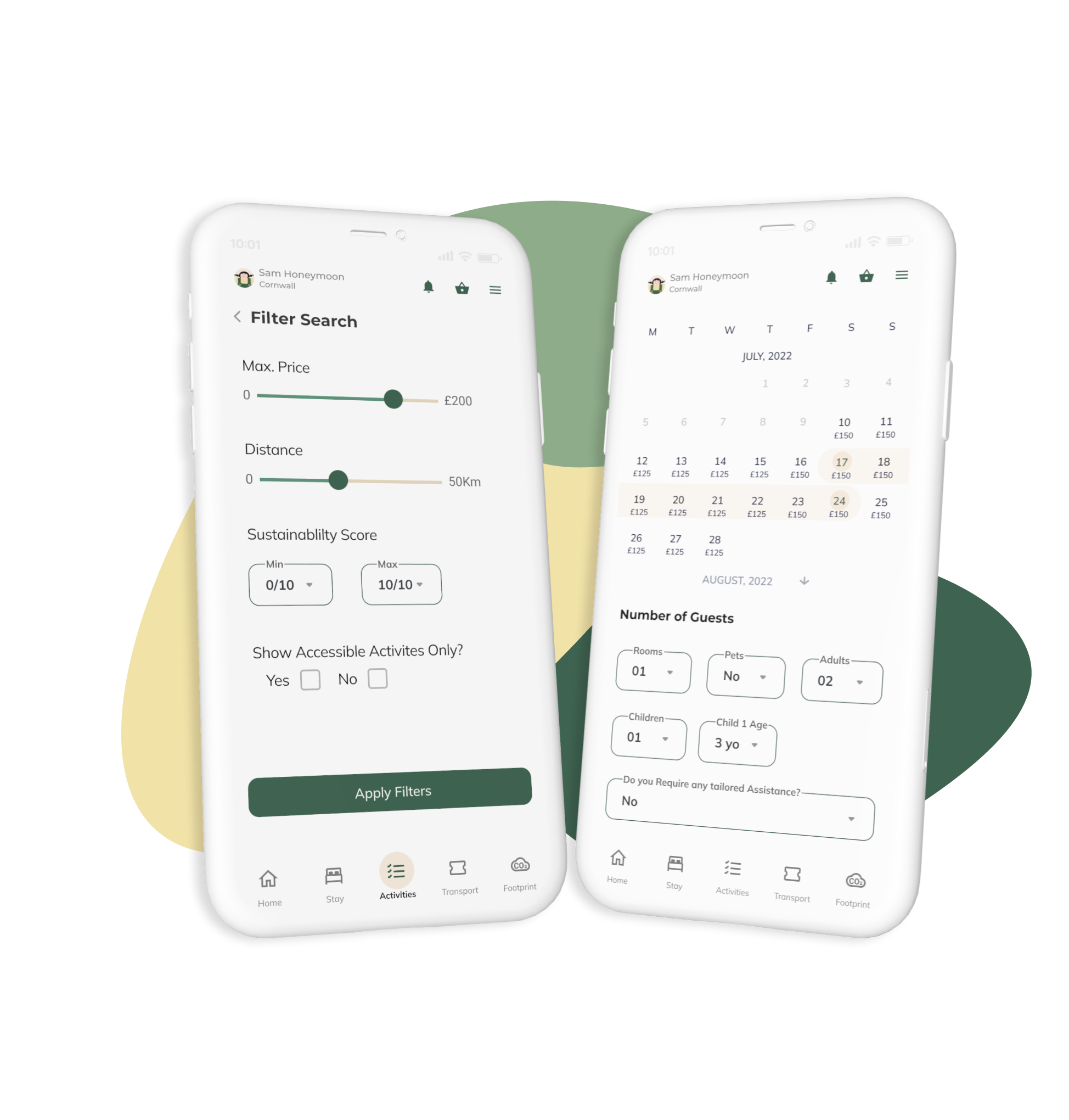
Designing sustainable travel for people who care about impact — without making the caring feel like a chore.
Ecotravel: Sustainable Travel Mobile App
The Challenge
Design a mobile application that helps environmentally conscious travellers make sustainable choices without sacrificing the convenience they expect from travel apps. The brief sat at an awkward intersection: sustainability products often lecture; travel products often ignore impact entirely. The design challenge was finding the space between.
Where I Focused
Catching an Accessibility Failure Early
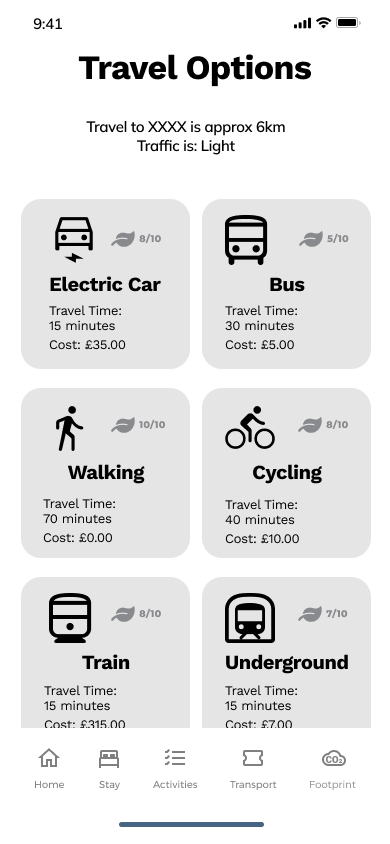
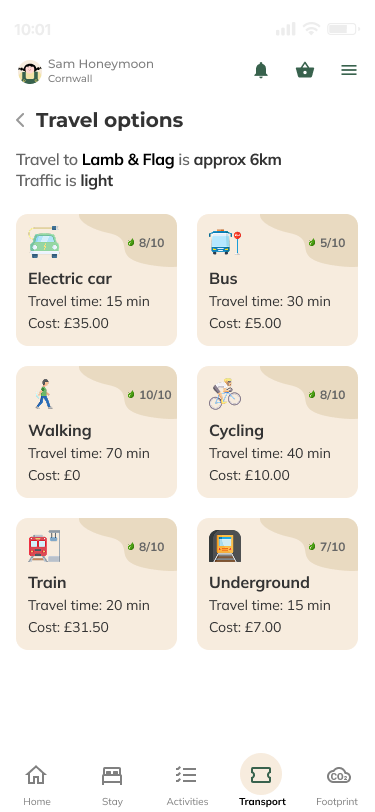
During the visual design phase I identified that the initial colour palette the team had selected failed accessibility standards. Rather than flagging it as a blocker, I proposed an alternative palette and documented the contrast rationale. This became the working palette for the remainder of the project.
The lesson reinforced something I now treat as a default: accessibility review before visual momentum builds, not after.
Problem Statement Synthesis
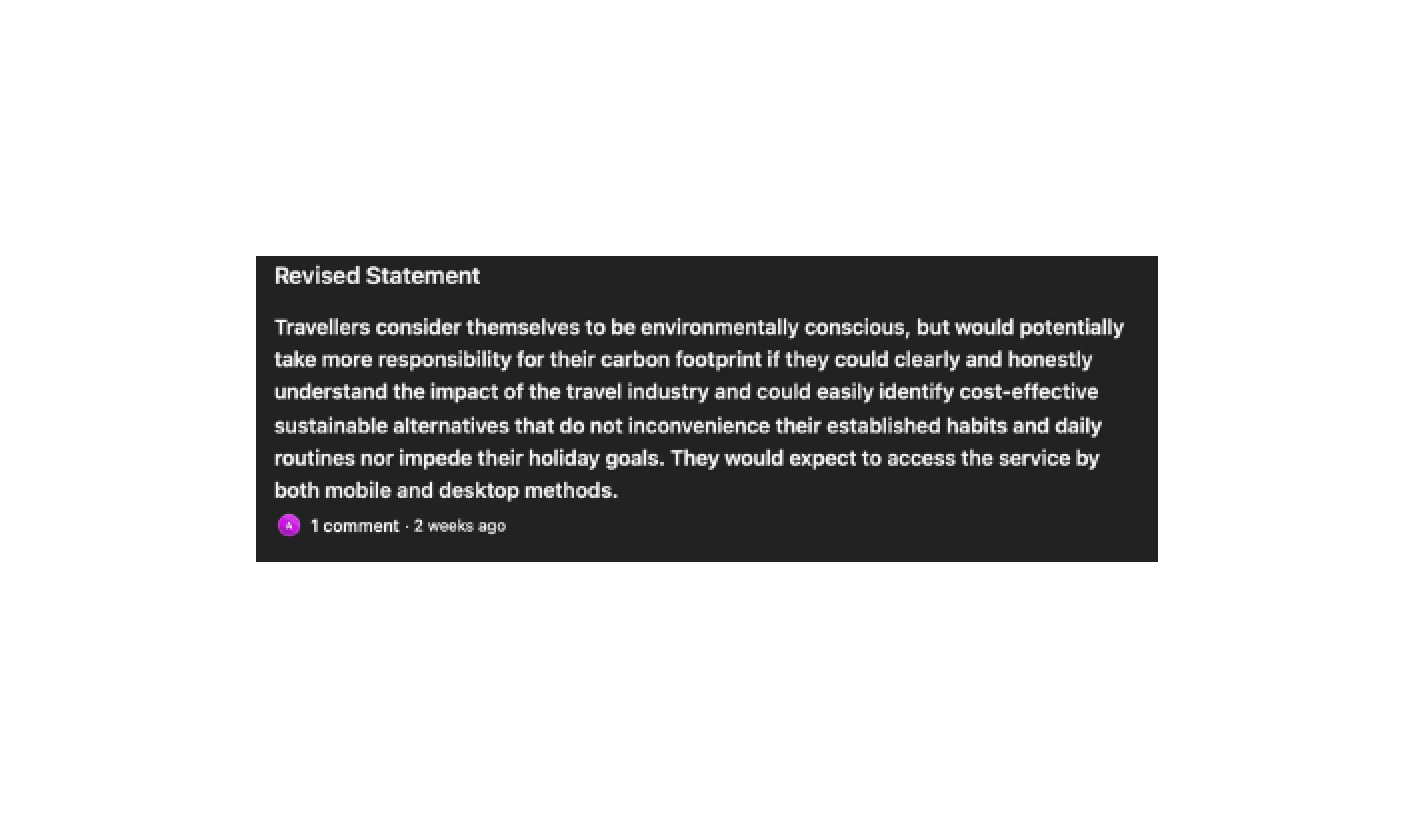
After our early research phase — surveys, user interviews, competitor analysis — the team had a lot of material but no shared direction. I led the synthesis of our brainstorming output and user feedback into a focused problem statement, which then went through several iterations as new user input came in.
Getting a distributed team to converge on a single framing is harder than it sounds, particularly across time zones with varying experience levels. The problem statement went through three meaningful revisions before stabilising.
What the Market Was Getting Wrong
I conducted the competitive analysis, examining existing sustainable travel apps and the broader market context, including the impact of COVID-19 on travel behaviour and the challenge of greenwashing in the sector. This shaped our understanding of what genuine sustainability features looked like versus performative ones, and fed directly into our positioning decisions.
Design System Foundation
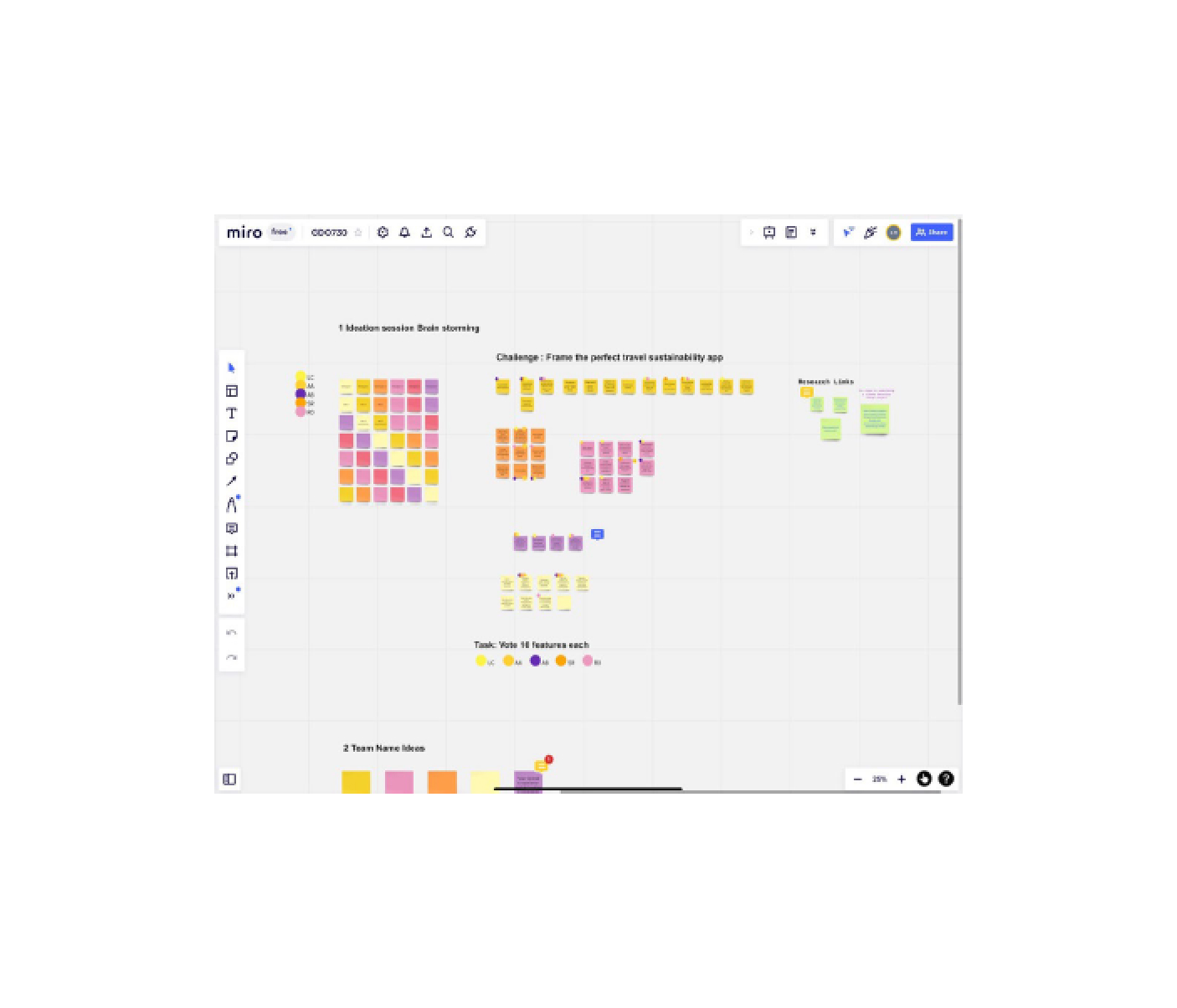
I set up the initial master files and style guide structure in Figma, establishing the foundation the team built on through the prototyping phase. I also explored Lottie animations to enhance presentation quality in the final deliverable.
What Made This Project Hard
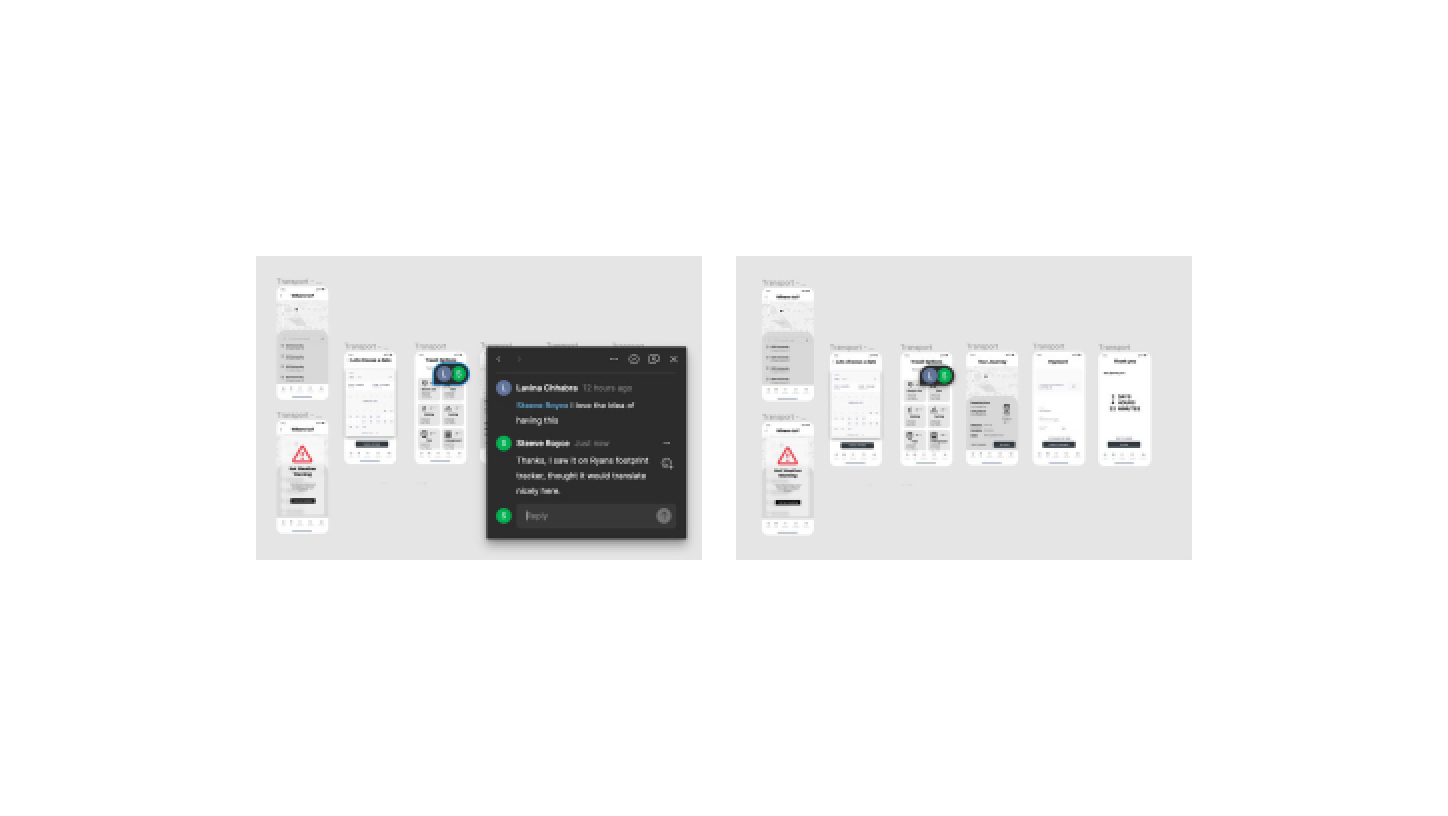
Remote collaboration across three time zones, with team members at different experience levels, created friction that the design work had to absorb. Decisions that would take minutes in a room took days asynchronously. I proposed FigJam as a shared working space, which helped, but the core lesson was about communication frequency: without it, distributed teams duplicate work and lose trust.
The tension between following an academic UX process rigorously and moving at the pace the team needed was real. I defaulted toward process, which slowed some decisions but kept the work grounded in research rather than instinct.
Reflection
This was a student project. The work was done under academic constraints, with a team assembled for the purpose rather than chosen for fit, on a compressed timeline. What it gave me was experience in the parts of design that don’t show up in portfolios: synthesis under ambiguity, accessibility as a non-negotiable, and the cost of poor communication in distributed teams.
The accessibility catch is the moment I return to most. Not because it was dramatic, but because it was early. Finding that kind of problem at the right stage is the whole point of process.
More Projects
Conversational AI Advisor
Designing a conversational AI triage and quality framework for an online technology provider — from quantitative log analysis through to the behavioural specification used as the engineering build brief.
View Case Study → 02Green Grow Precision Planting - Digital Growing Companion
A comprehensive thesis project developing an AI-augmented mobile app with smart sensor integration to help home gardeners achieve consistent yields through data-driven insights.
View Case Study →